
CEED 2025 Complete Solutions & Answer Key | All 44 Questions Explained
Download CEED 2025 answer key with complete step-by-step solutions for all 44 questions. Detailed explanations, concepts, and preparation tips for CEED Part-A.
CEED 2025 Complete Solutions & Answer Key
Complete step-by-step solutions for all 44 questions from CEED 2025 Part-A with detailed explanations, concepts, and strategies.
Complete Answer Key Overview
Section 1: Numerical Answer Type (NAT) Questions
Questions 1-8 | 32 Marks Total | No Negative Marking
| Q# | Answer | Topic | Difficulty | Marks |
|---|---|---|---|---|
| 1 | 2 | Creativity | Medium | 4 |
| 2 | 10 | Visualization & Spatial Reasoning | Medium | 4 |
| 3 | 9 | Visualization & Spatial Reasoning | Medium | 4 |
| 4 | 11 | Observation & Design Sensitivity | Medium | 4 |
| 5 | 48 | Analytical & Logical Reasoning | Hard | 4 |
| 6 | 96 | Analytical & Logical Reasoning | Hard | 4 |
| 7 | 30 | Visualization & Spatial Reasoning | Hard | 4 |
| 8 | 41.4 | Analytical & Logical Reasoning | Medium | 4 |
Strategy: Attempt all questions since there's no negative marking. Allocate 12-15 minutes. Target 70-80% accuracy.
Section 2: Multiple Select Questions (MSQ)
Questions 9-18 | 40 Marks Total | Partial Marking Available
| Q# | Correct Options | Topic | Difficulty | Marks |
|---|---|---|---|---|
| 9 | A, B, C | Visualization & Spatial Reasoning | Medium | 4 |
| 10 | B, D | Visualization & Spatial Reasoning | Medium | 4 |
| 11 | A, D | Art & Design Knowledge | Medium | 4 |
| 12 | A, B | Visualization & Spatial Reasoning | Medium | 4 |
| 13 | A, C, D | Practical & Scientific Knowledge | Medium | 4 |
| 14 | A, C | Design Methods & Practices | Medium | 4 |
| 15 | B, C | Design Methods & Practices | Medium | 4 |
| 16 | B, D | Visualization & Spatial Reasoning | Medium | 4 |
| 17 | A, D | Design Methods & Practices | Medium | 4 |
| 18 | C, D | Visualization & Spatial Reasoning | Hard | 4 |
Strategy: Be selective—attempt only if 70%+ confident. Wrong options carry -1 penalty. Focus on elimination.
Section 3: Multiple Choice Questions (MCQ)
Questions 19-44 | 78 Marks Total | Small Negative Marking
| Q# | Answer | Topic | Difficulty | Q# | Answer | Topic | Difficulty |
|---|---|---|---|---|---|---|---|
| 19 | B | Creativity | Medium | 32 | D | Art & Design | Medium |
| 20 | B | Visualization | Medium | 33 | D | Visualization | Medium |
| 21 | B | Visualization | Medium | 34 | A | Art & Design | Medium |
| 22 | A | Creativity | Medium | 35 | C | Art & Design | Medium |
| 23 | B | Design Methods | Medium | 36 | B | Observation | Medium |
| 24 | C | Visualization | Medium | 37 | D | Art & Design | Medium |
| 25 | B | Visualization | Medium | 38 | A | Visualization | Medium |
| 26 | C | Visualization | Medium | 39 | C | Creativity | Medium |
| 27 | B | Creativity | Medium | 40 | C | Visualization | Medium |
| 28 | B | Creativity | Medium | 41 | DROPPED | — | — |
| 29 | A | Visualization | Medium | 42 | C | Visualization | Medium |
| 30 | B | Visualization | Medium | 43 | C | Art & Design | Medium |
| 31 | B | Visualization | Medium | 44 | A | Observation | Medium |
Strategy: Small negative marking (-0.5). Attempt if you can eliminate 2 options. Allocate 30-35 minutes.
📊 Section 1: NAT Questions — Detailed Solutions {#section-1-nat-questions}
Question 1 {#question-1}
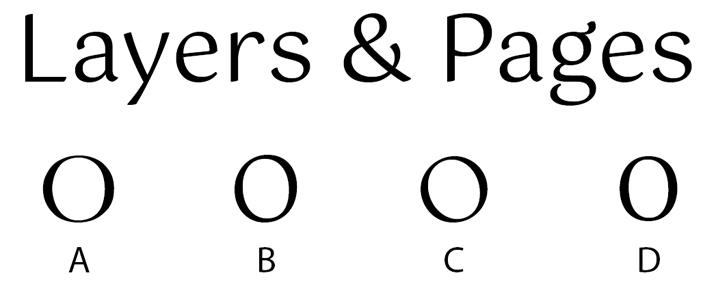
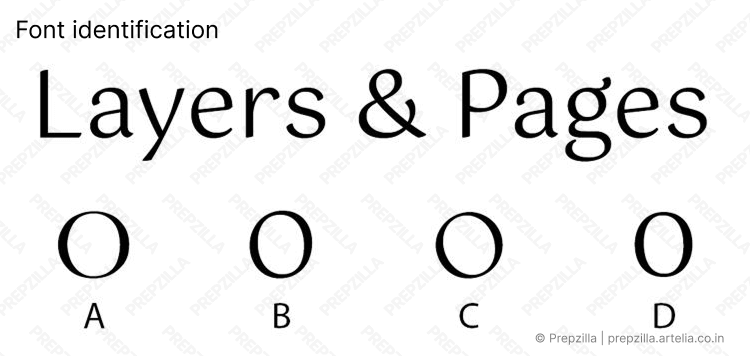
Typography Pattern Recognition
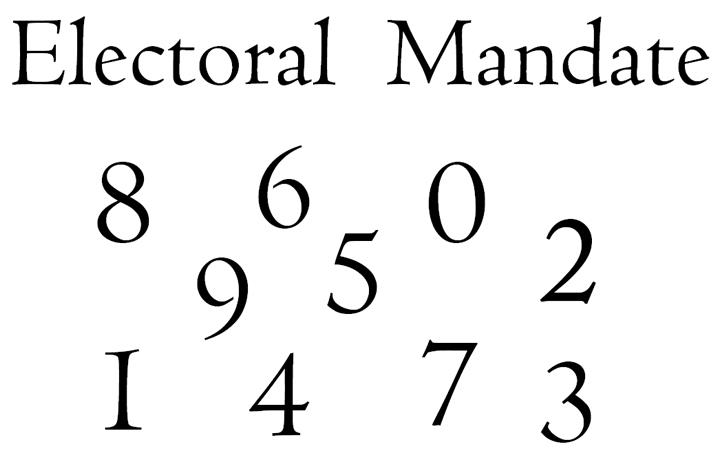
Solution Approach
Find the glyph whose typographic features (serifs, stroke contrast, terminals, curvature) don't match the rest. Inspect each digit at normal and zoomed-in scale to identify which one has different terminal or stroke constructions.
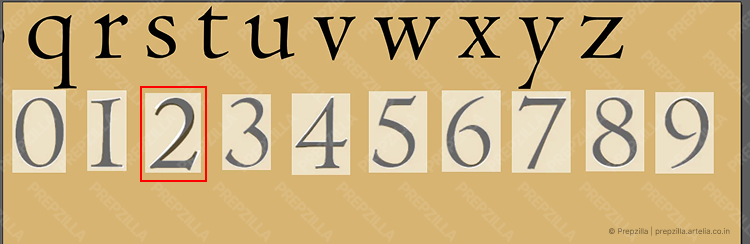
Key Concept
Find the glyph whose typographic features (serifs, stroke contrast, terminals, curvature) don't match the rest.
Common Mistake
Rotated digits looking different while actually matching
Question 2 {#question-2}
Surface Counting in 3D Revolution
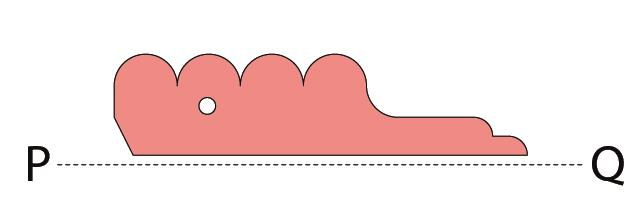
Solution Approach
Count distinct continuous surfaces produced when the planar region is swept around the given axis. The 270° sweep creates 10 surfaces total: 7 outer, 1 inner tube from the hole, and 2 radial end-surfaces.
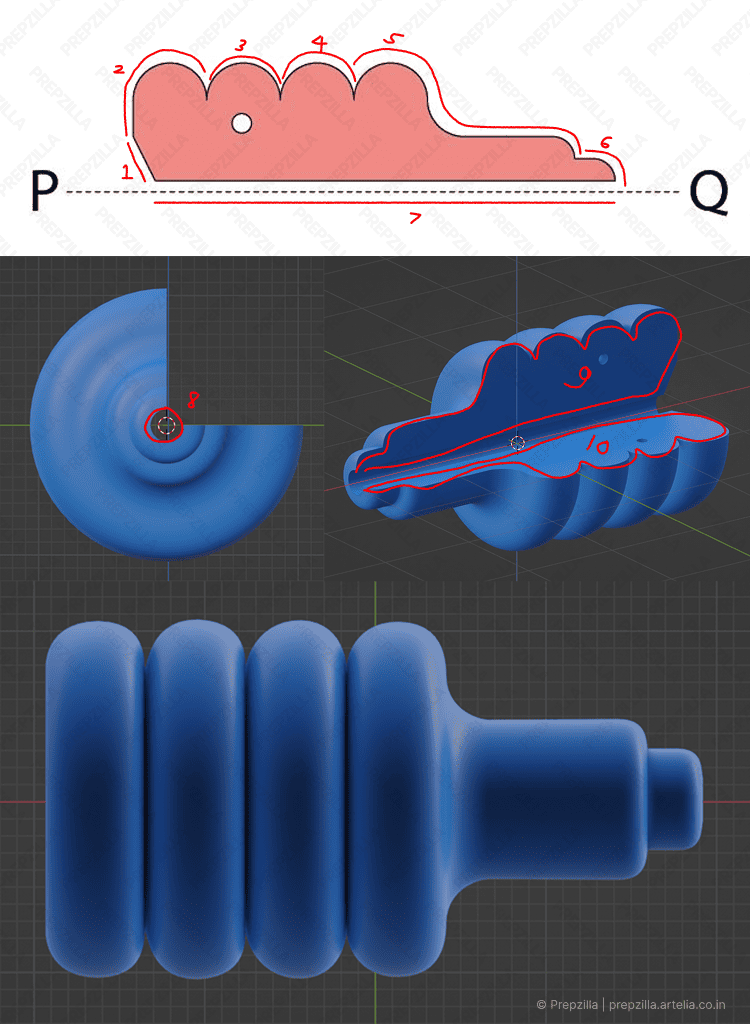
Key Concept
Count distinct continuous surfaces produced when the planar region is swept around the given axis.
Common Mistake
Counting the axis as a surface source, treating the two radial end-surfaces as a single surface, missing the inner curved surface produced by the hole
Question 3 {#question-3}
Paper Folding with Pawns
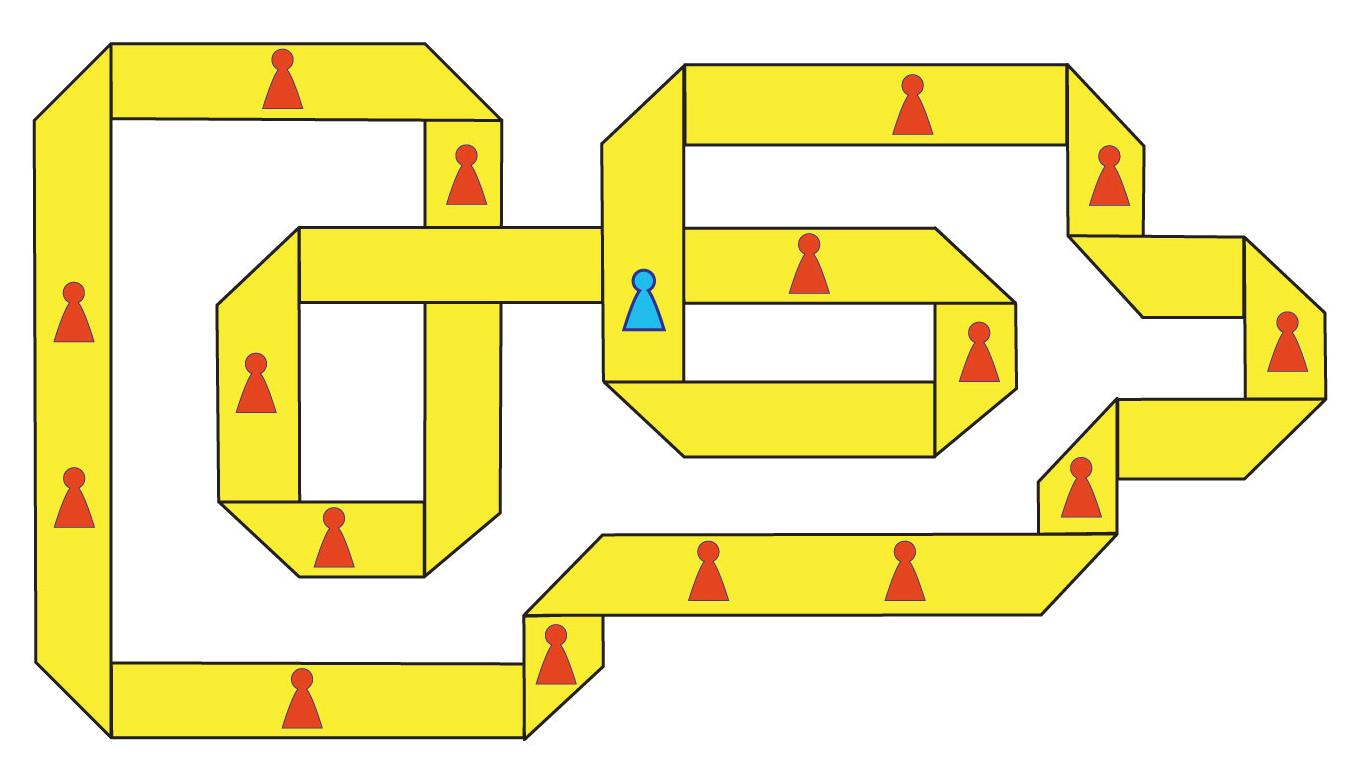
Solution Approach
Each fold flips the paper. Start from the blue pawn panel (FRONT), then walk along the strip panel-by-panel. Every time you cross a fold, flip the current side (FRONT↔BACK). Mark the side when you reach each red pawn.
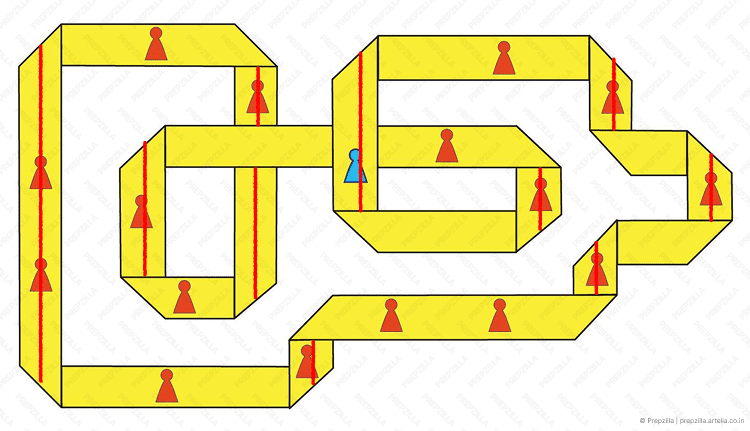
Key Concept
Each fold flips the paper. Move along the contiguous strip from the blue pawn and toggle 'side' at every fold.
Common Mistake
Losing track when the path overlaps visually; always follow the connected edge sequence
Question 4 {#question-4}
Shoe Pairing
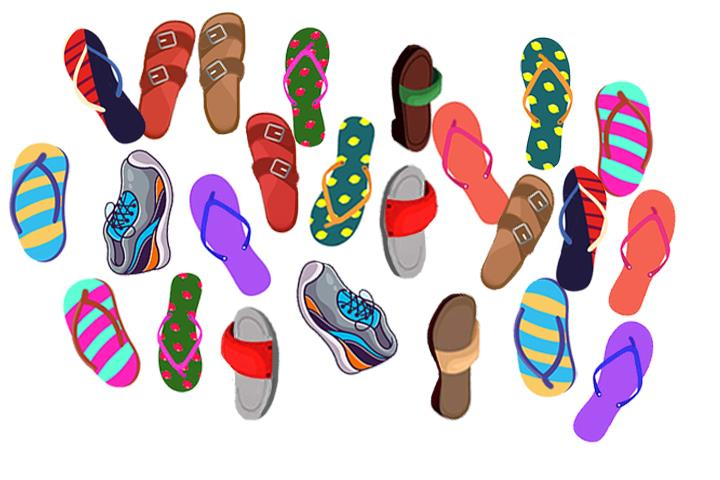
Solution Approach
Valid pairs require identical design with mirrored orientation (one left, one right). Identify distinct designs by color and strap pattern, then count only sets with both orientations present.

Key Concept
Pairs are determined by identical design, orientation mirrored. Treat each shoe as belonging to a left–right pair. Visual similarity alone is insufficient; orientation defines pairing validity.
Common Mistake
Grouping by color alone and ignoring strap geometry, counting pairs before isolating single-instance designs, losing track of items due to scanning visually instead of marking groups, treating mirrored orientation as irrelevant and pairing two left shoes
Question 5 {#question-5}
Area Calculation with Shifted Segments
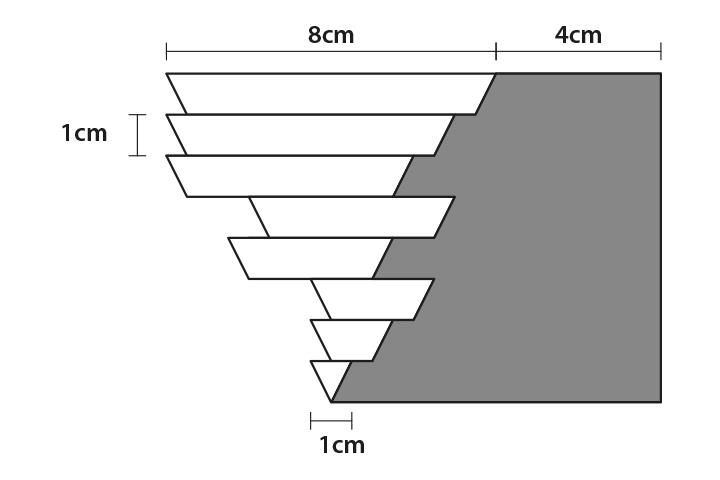
Solution Approach
Horizontal translation does not affect area. Treat the figure as an isosceles triangle with 8 cm height. Calculate the area of the rightmost 4 cm strip using similar triangles or integration. The shifting of middle segments is irrelevant.
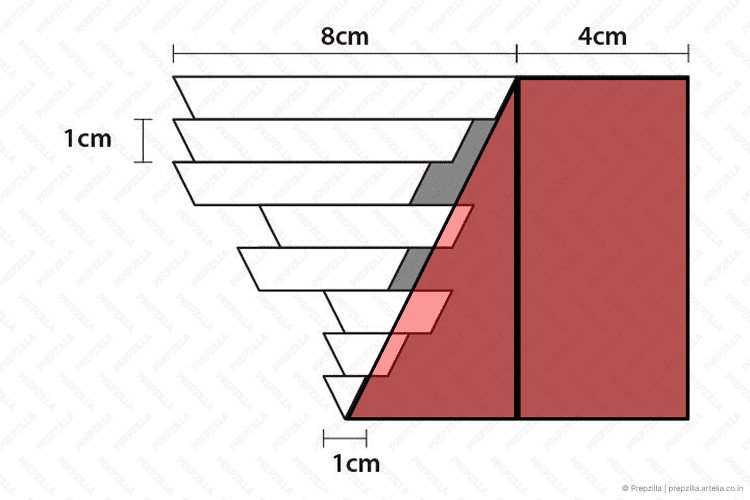
Key Concept
Fear is the mind killer - do not fear math in CEED. Usually, the questions related to math in CEED require basic arithmetic and geometry. The solution is usually something simple and visual.
Common Mistake
Trying to sum areas of individual pieces rather than determining the area of the original figure
Question 6 {#question-6}
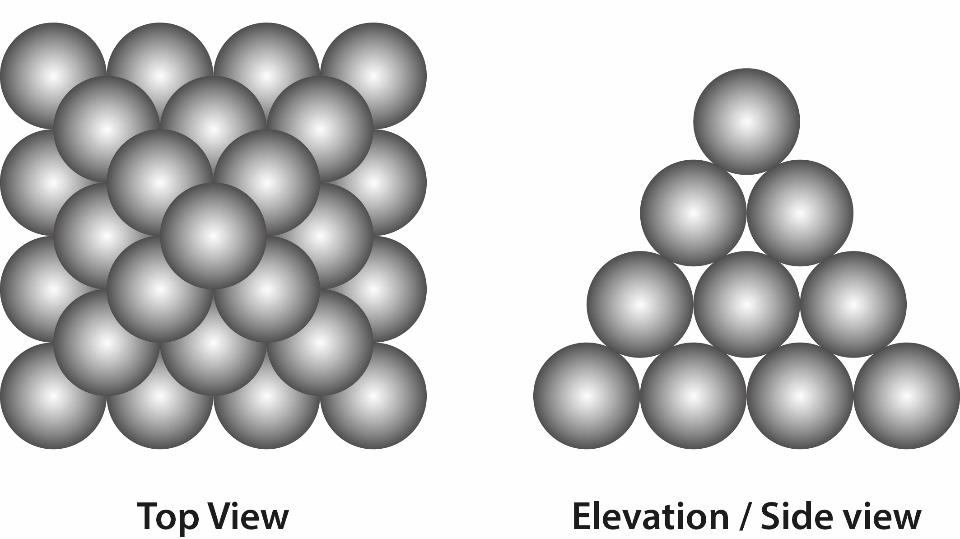
Sphere Contact Points
Solution Approach
Count sphere-sphere contacts layer by layer. Four layers: 16 (4×4), 9 (3×3), 4 (2×2), 1 sphere. Calculate horizontal contacts within each layer, then vertical contacts between stacked layers. Avoid double-counting.
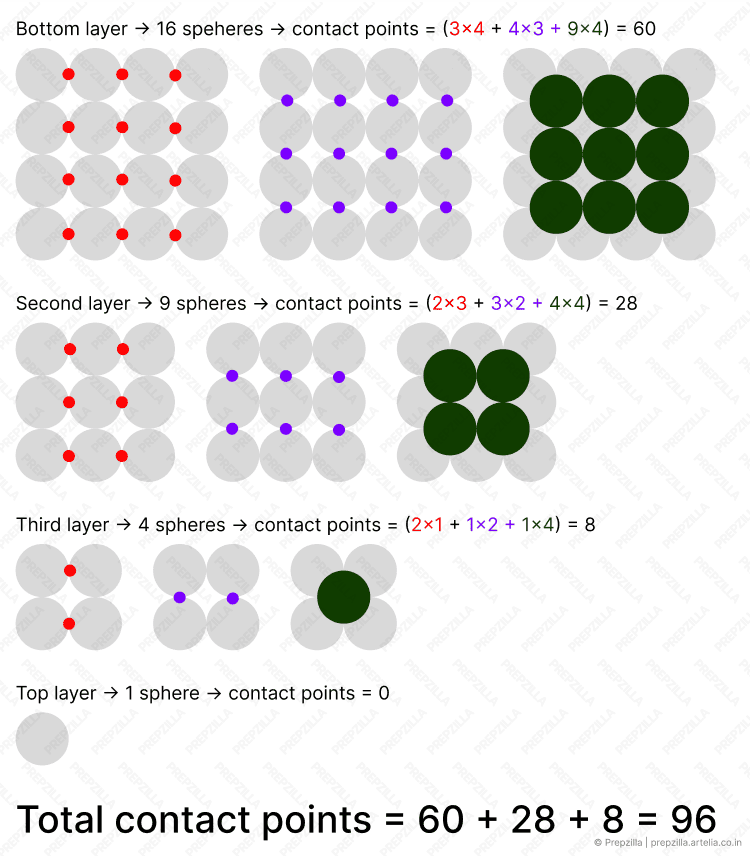
Key Concept
Count layer by layer and count only sphere-sphere contacts
Common Mistake
Double-counting the same contact from both spheres' perspectives, not separating horizontal contacts within a layer from vertical contacts across layers
Question 7 {#question-7}
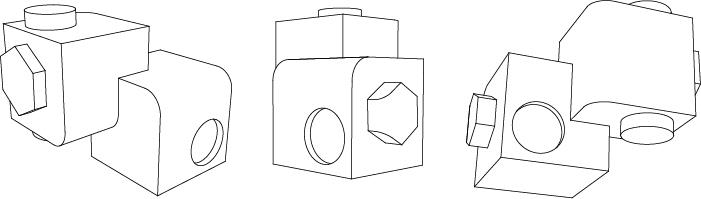
Counting Faces of 3D Objects
Solution Approach
Count only distinct planes. Curved portions are single continuous surfaces. Break objects into primitives: cylinders (circle + strip), hexagons (top + sides), body sections. Object 1 = 15 faces, Object 2 = 15 faces.
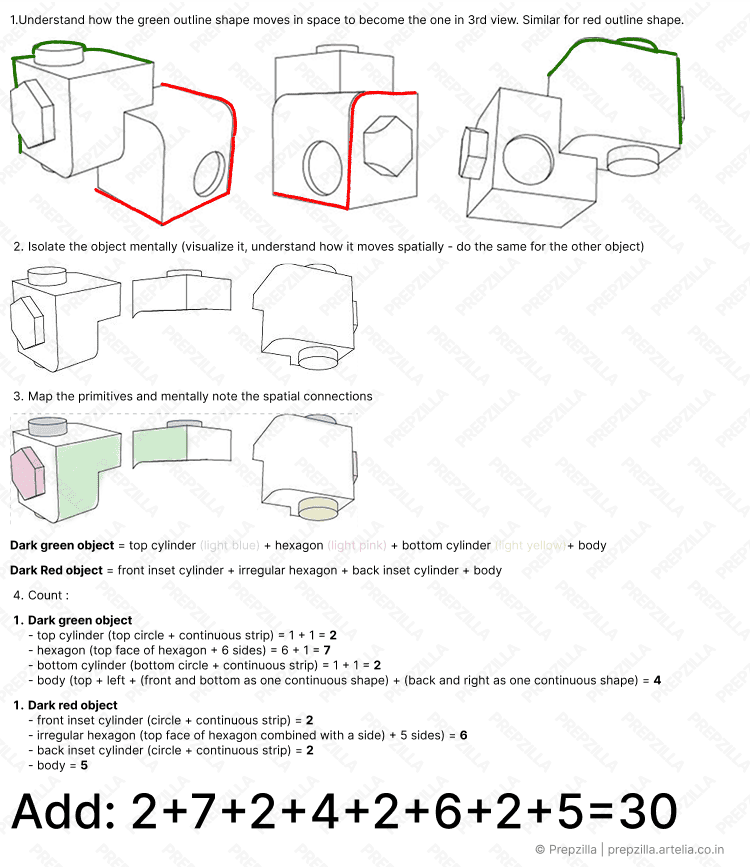
Key Concept
Count only distinct planes. Curved or cylindrical portions count as single continuous surfaces.
Common Mistake
Counting each visible patch as separate instead of grouping continuous surfaces, double-counting hidden mating faces that merge into the parent block, misidentifying the hexagonal prism sides as six faces instead of one wrapped surface, treating curved blends as multiple surfaces rather than one continuous sweep
Question 8 {#question-8}
Fixed-Width Font Character Counting
Solution Approach
Count all characters including spaces in fixed-width font. 10 words x 6 chars = 60 characters, plus 9 spaces between words = 69 total. Multiply by 0.6 cm = 41.4 cm.
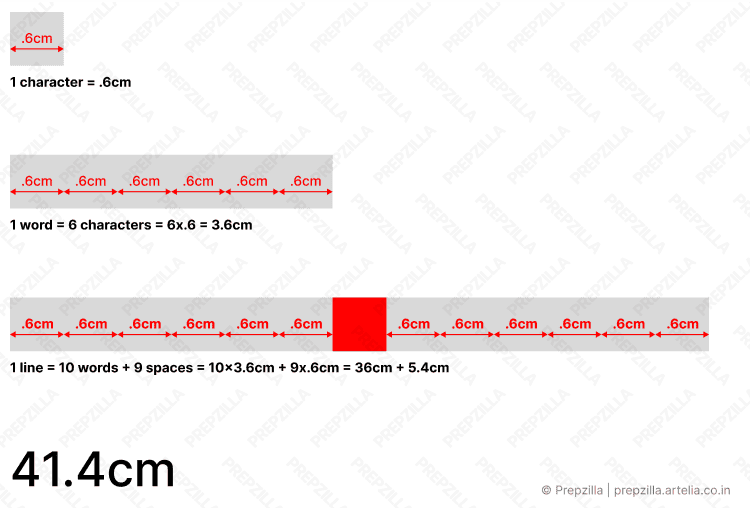
Key Concept
Count characters. Each character, including spaces, has fixed width. Do not treat words as visual blocks. Treat every character as equal-width units and sum them.
Common Mistake
Forgetting spaces entirely, treating a word as a unit instead of counting characters, assuming last word also has a trailing space
📊 Section 2: MSQ Questions — Detailed Solutions {#section-2-msq-questions}
Question 9 {#question-9}
3D Cross-Sections
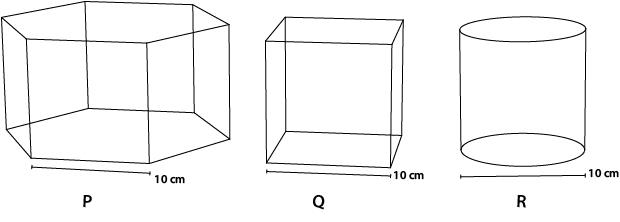
Solution Approach
Cylinder (R): Has a curved surface → can form circles, ellipses (curved shapes). Vertical cuts → rectangles or even squares. Cube (Q) & Hexagonal Prism (P): Flat faces → only polygons. Can form rectangles, squares, and isosceles triangles from angled cuts. Only hexagonal prism (P) can produce a regular hexagon when cut parallel to its base.
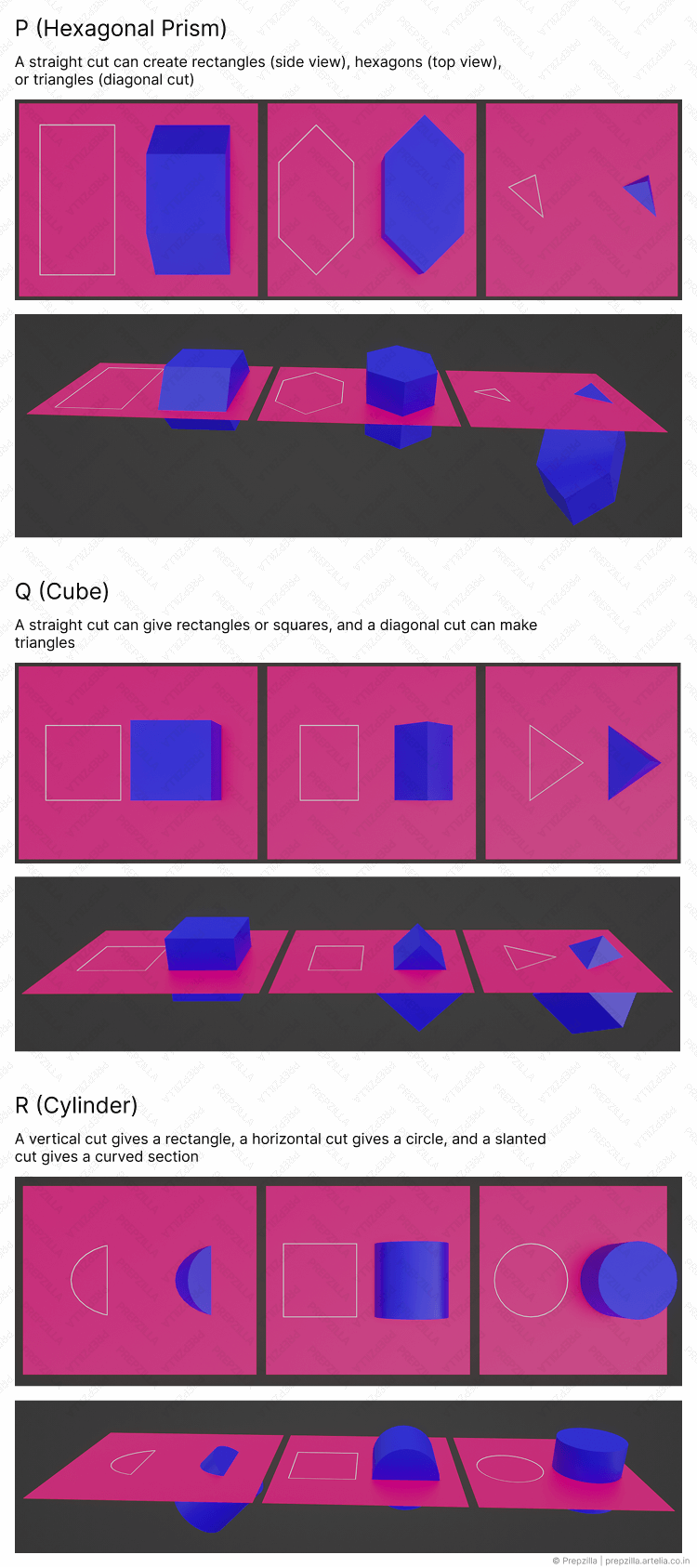
Key Concept
Understanding how different solid geometries (prisms, cubes, cylinders) generate polygonal or curvilinear cross-sections when intersected by straight cutting planes.
Common Mistake
Assuming a cylinder cannot form a rectangle or square - it can, using vertical cuts. Believing only the faces of the solid can appear as cross-sections, ignoring oblique cuts. Thinking a cube can produce a regular hexagon - only a hexagonal prism can. Confusing curvilinear sections with polygons.
Question 10 {#question-10}
Orthographic View Matching

Solution Approach
Match the orthographic constraints. Top view fixes the plan shape, front view fixes the height profile. A valid 3D object must simultaneously satisfy both views.
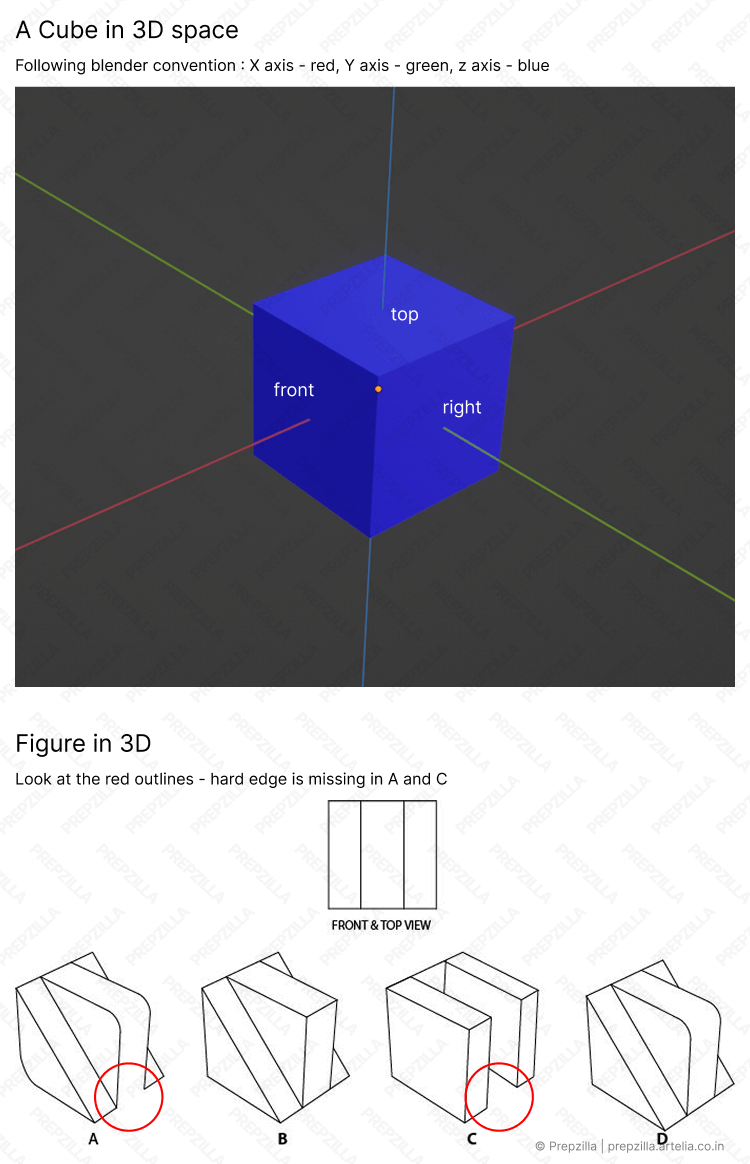
Key Concept
Match the orthographic constraints. Top view fixes the plan shape. Front view fixes the height profile. A valid 3D object must simultaneously satisfy both.
Common Mistake
Believing shading or surface decals matter; they do not project. Matching only one of the two orthographic views and assuming fit. Ignoring that a curved form can never project as a straight parallel segment in both front and top. Letting perspective distortion fool footprint recognition - always re-flatten mentally. Accepting impossible geometry: edges that would need to 'break' to project the given way.
Question 11 {#question-11}
Story Graph Interpretation
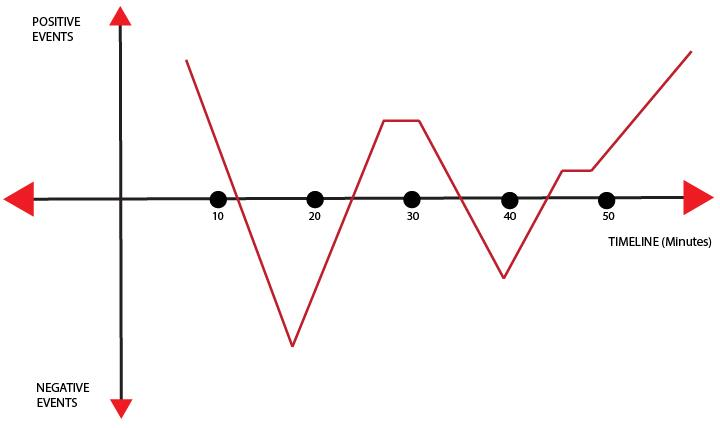
Solution Approach
Read the graph and interpret rises and drops in the protagonist's fortune. Positive slope = improvement. Negative slope = setback. Flat = neutral or uneventful interval. A sharp fall around minutes 12–18 indicates a major setback. The rise toward the end indicates recovery and likely final success.
Key Concept
Read the graph and interpret rises and drops in the protagonist's fortune. Positive slope = improvement. Negative slope = setback. Flat = neutral or uneventful interval. Answers must be constrained strictly to what the graph permits.
Common Mistake
Reading specific story events (accident, betrayal, villain defeat) when the graph only shows positive/negative direction, not causes. Assuming endpoints mean literal victory or literal failure instead of generic improvement/decline. Treating the neutral timeline segments as positive or negative without slope. Conflating magnitude with meaning - a deep dip does not specify what happened, only that something strongly negative occurred.
Question 12 {#question-12}
Cube Net Folding
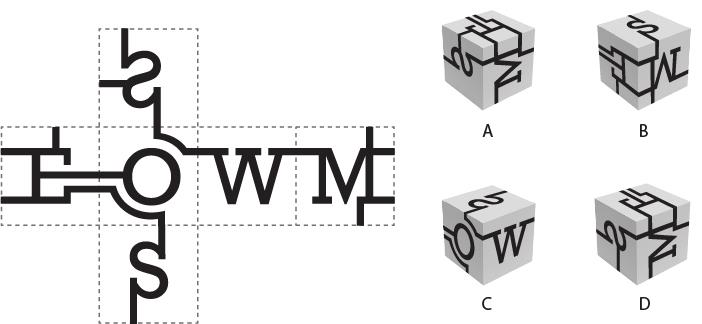
Solution Approach
Cube folding preserves adjacency and orientation through rotation only. No face can flip or mirror. Identify the central face and its four neighbors in the net. Track which edge each neighbor attaches to. Mentally rotate each neighbor 90° around its shared edge.
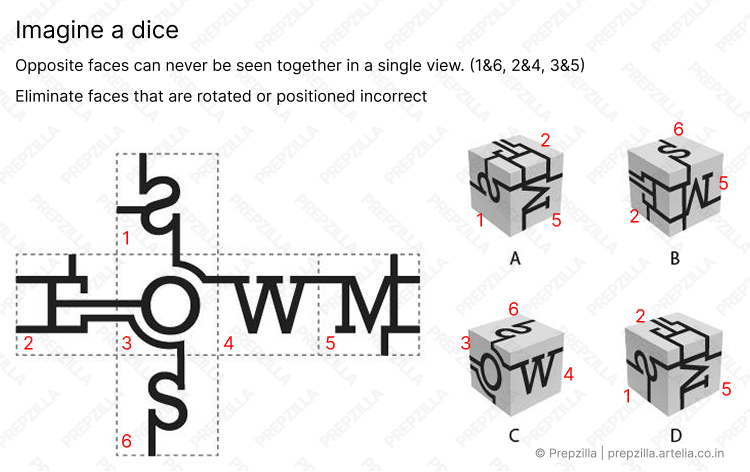
Key Concept
Cube folding preserves adjacency and orientation through rotation only. No face can flip or mirror. Any option requiring a reflection is invalid.
Common Mistake
Treating rotations as reflections, forgetting which faces become opposites, matching shapes without checking orientation, misreading left/right neighbors in the net
Question 13 {#question-13}
Mechanical Linkages
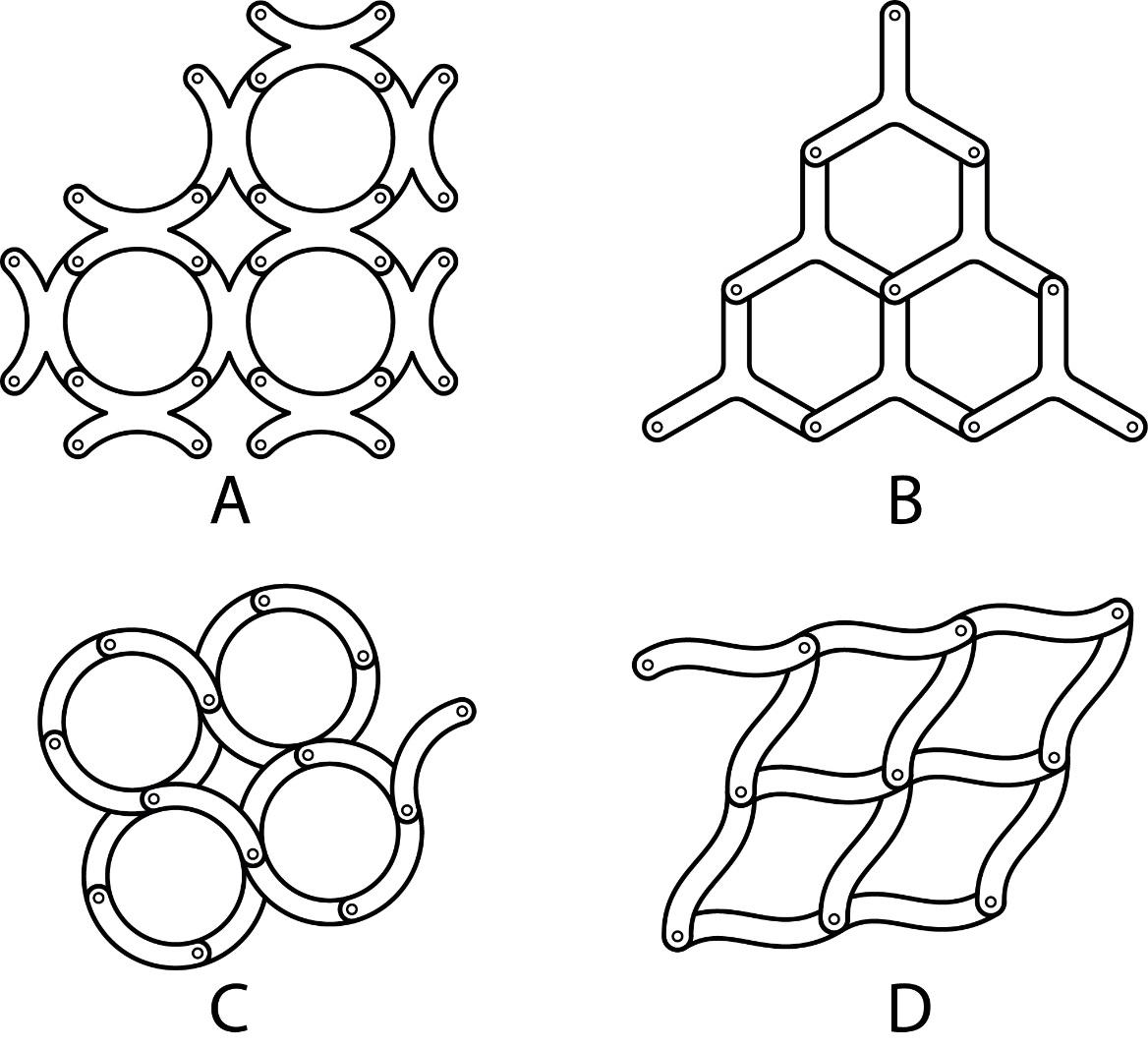
Solution Approach
A mechanism moves only if each link has at least one degree of freedom through hinges and the overall structure avoids forming a rigid loop. Hinges must create open kinematic chains, not closed locked polygons.
Key Concept
A mechanism moves only if each link has at least one degree of freedom through hinges and the overall structure avoids forming a rigid loop. Hinges must create open kinematic chains, not closed locked polygons.
Common Mistake
Confusing visual overlap with mechanical locking, assuming symmetry implies rigidity, misreading a hinge as a welded joint, failing to check if a loop is over-constrained
Question 14 {#question-14}
Chair Design Analysis
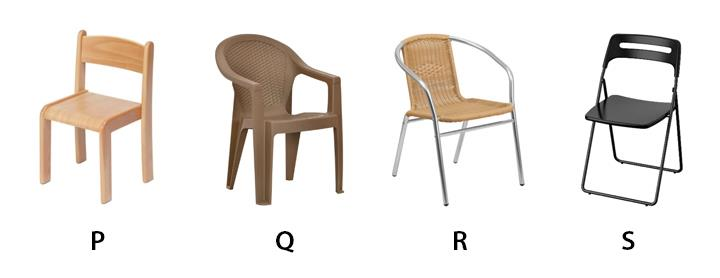
Solution Approach
This question tests understanding of design-for-manufacture (DFM) and design-for-assembly (DFA) principles. Students must infer from each chair's shape and material whether it: (1) Stacks easily (single-piece form, tapered legs, no protrusions), or (2) Requires many manufacturing/assembly operations (many components, joints, welds, fasteners, different materials).
Key Concept
Tests understanding of design-for-manufacture (DFM) and design-for-assembly (DFA) principles applied to real products.
Common Mistake
Judging by appearance rather than manufacturing logic, assuming 'plastic = simple' without noting one-piece vs multi-piece, thinking folding chairs are simple - they usually require more operations (hinges, rivets, precision fitting), not checking stacking design features - stackability is about geometry, not material alone
Question 15 {#question-15}
Scissors Ergonomics
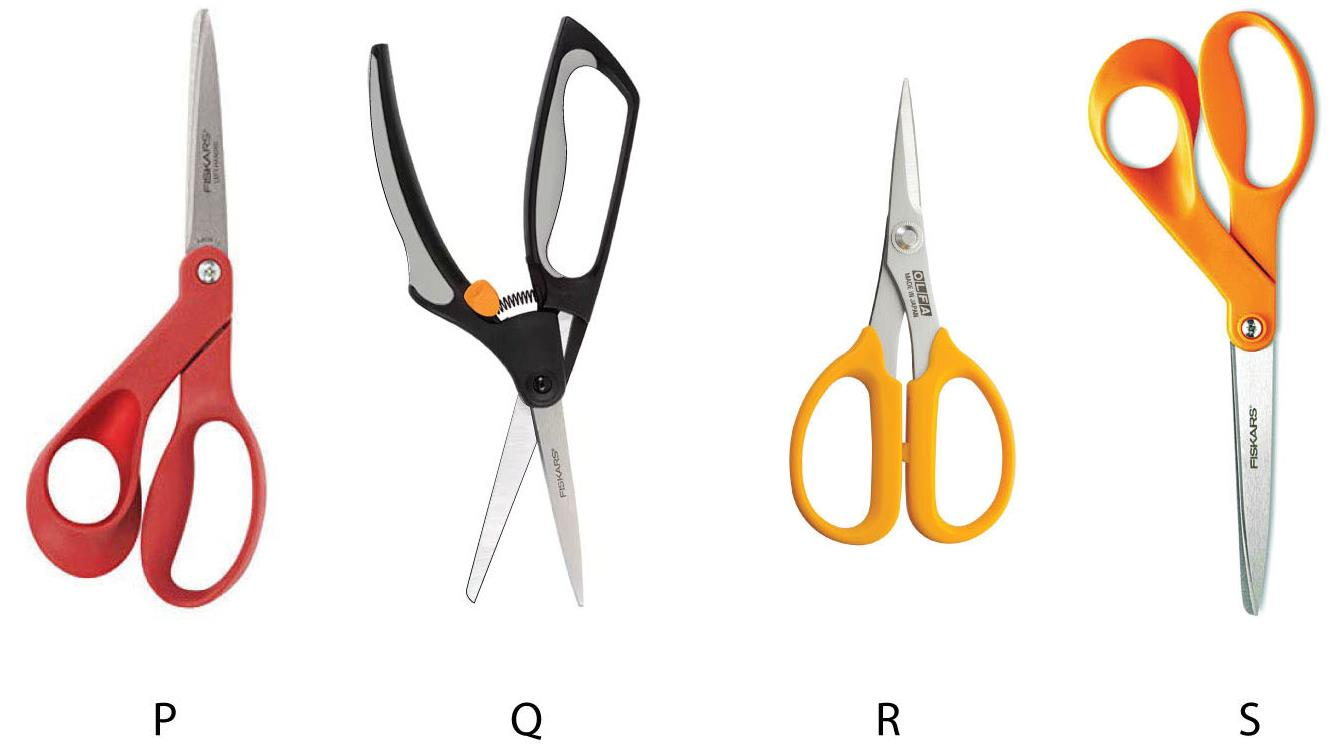
Solution Approach
This question tests whether students can identify ergonomic design features and mechanical functions of different scissors. Key aspects: (1) Handedness based on blade orientation and handle shape, (2) Spring-loaded vs manual operation, (3) Symmetrical vs ergonomic handles for ambidextrous usability, (4) Effort required depending on mechanical assistance.
Key Concept
Tests ability to identify ergonomic design features and mechanical functions of different scissors.
Common Mistake
Confusing handle shape with blade orientation, ignoring symmetry - symmetric handles almost always mean ambidextrous use, misidentifying spring-loaded mechanisms - focus only on blade shape, overlooking viewing angle of the top blade
Question 16 {#question-16}
Perspective Drawing Principles
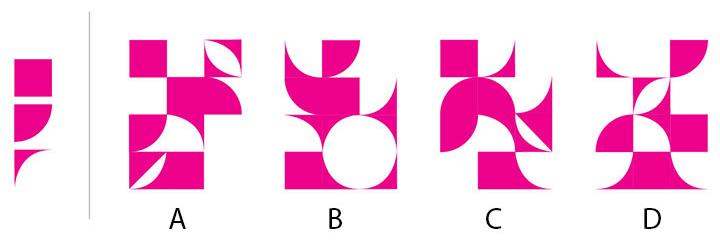
Solution Approach
Understanding perspective drawing requires knowledge of vanishing points, horizon lines, and how parallel lines converge. In one-point perspective, all parallel lines converge to a single vanishing point on the horizon line.
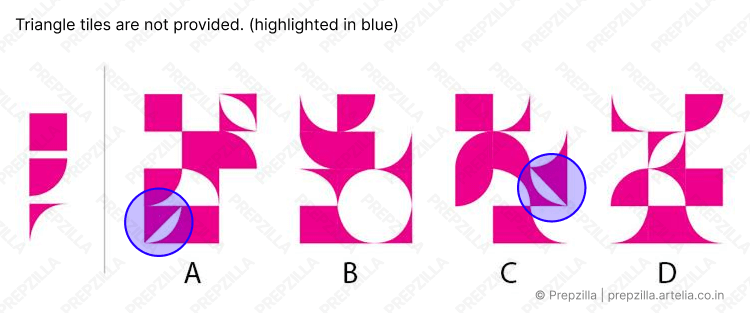
Key Concept
Perspective drawing creates the illusion of depth on a 2D surface using vanishing points and convergence of parallel lines.
Common Mistake
Confusing different types of perspective (one-point, two-point, three-point) and their specific rules
Question 17 {#question-17}
Bauhaus Design Principles

Solution Approach
Bauhaus emphasized 'form follows function', integration of art and technology, and mass production. Key principles include simplicity, functionality, and the marriage of fine arts with crafts and industrial design.
Key Concept
Bauhaus revolutionized design by emphasizing functionality, simplicity, and the integration of art with industrial production.
Common Mistake
Confusing Bauhaus with other modernist movements or not understanding its emphasis on functionality over decoration
Question 18 {#question-18}
Design Process Methodology

Solution Approach
Design thinking follows a human-centered approach with stages: Empathize, Define, Ideate, Prototype, and Test. Each stage has specific goals and methods for problem-solving.
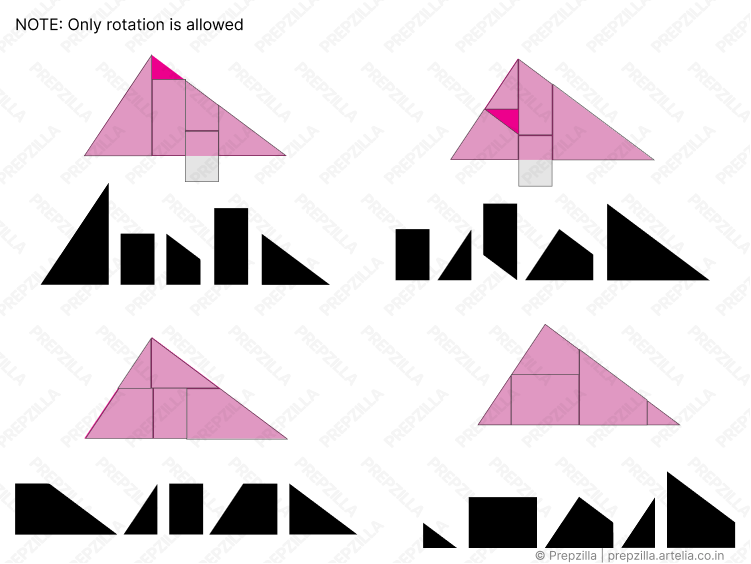
Key Concept
Design thinking is an iterative process that focuses on understanding users, challenging assumptions, and creating innovative solutions.
Common Mistake
Mixing up the order of design thinking stages or confusing it with other design methodologies
📊 Section 3: MCQ Questions — Detailed Solutions {#section-3-mcq-questions}
Question 19 {#question-19}
Color Theory Fundamentals
Solution Approach
Color theory involves understanding primary, secondary, and tertiary colors, color harmonies (complementary, analogous, triadic), and color properties (hue, saturation, brightness).
Key Concept
Color theory provides systematic methods for combining colors effectively and understanding their psychological and visual impact.
Common Mistake
Confusing different color models (RGB, CMYK, HSV) or misunderstanding color harmony relationships
Question 20 {#question-20}
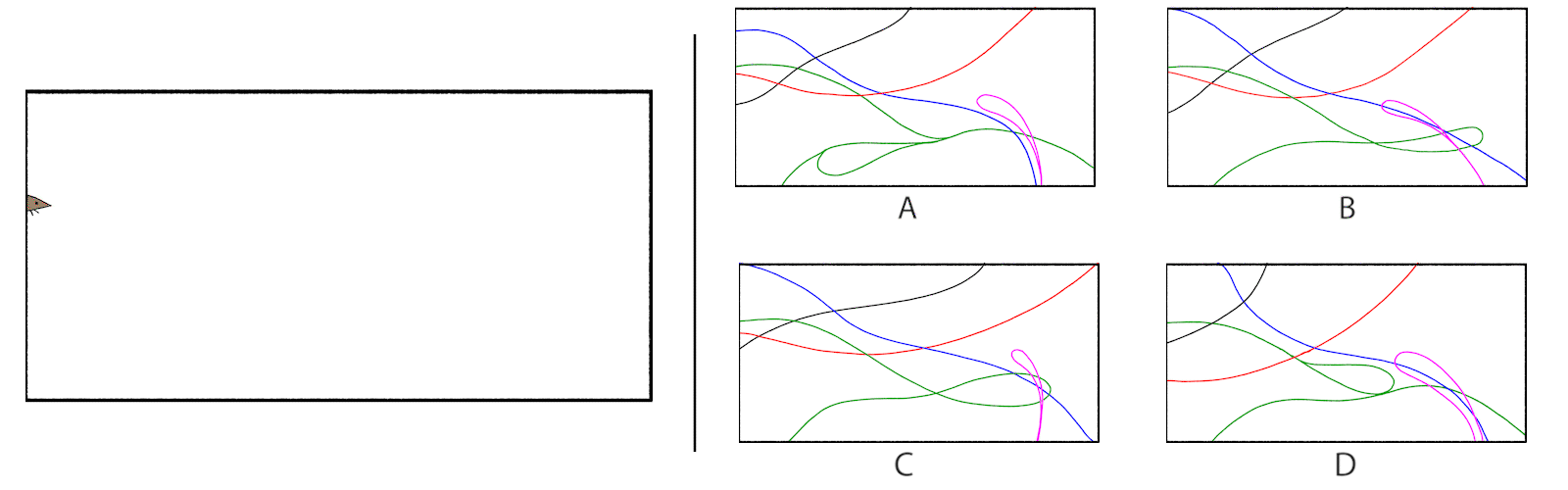
Typography Principles
Solution Approach
Typography involves understanding typeface anatomy, hierarchy, readability, and the relationship between text and layout. Key concepts include kerning, leading, tracking, and font classification.
Key Concept
Good typography enhances readability and communication through careful selection and arrangement of typefaces.
Common Mistake
Confusing kerning with tracking, or not understanding the difference between typeface and font
Question 21 {#question-21}
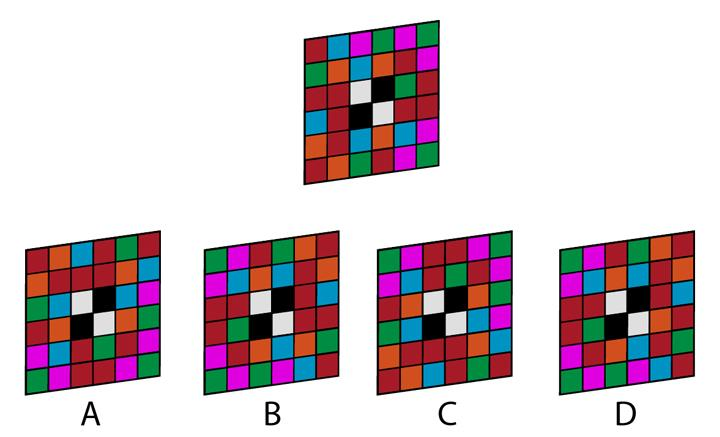
Gestalt Principles
Solution Approach
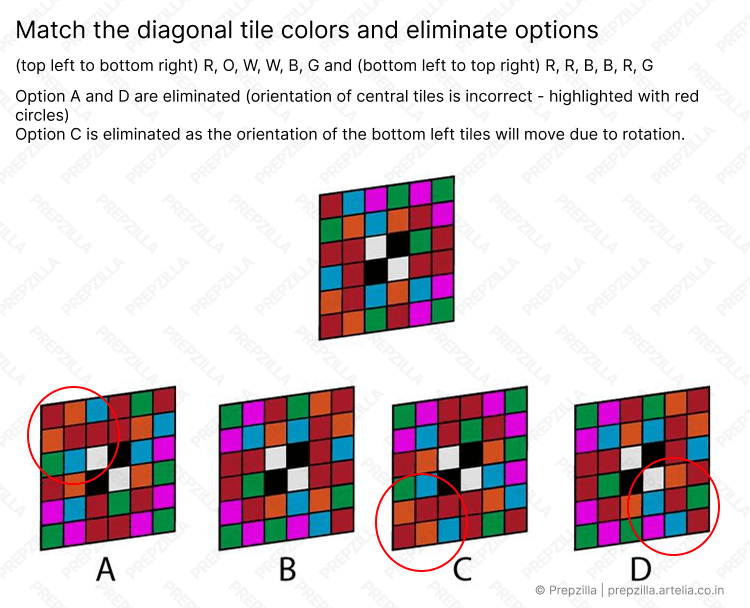
Gestalt principles explain how humans perceive visual elements as unified wholes. Key principles include proximity, similarity, closure, continuity, and figure-ground relationship.
Key Concept
Gestalt principles help designers understand how viewers naturally organize and interpret visual information.
Common Mistake
Confusing different Gestalt principles or not understanding how they apply to design composition
Question 22 {#question-22}
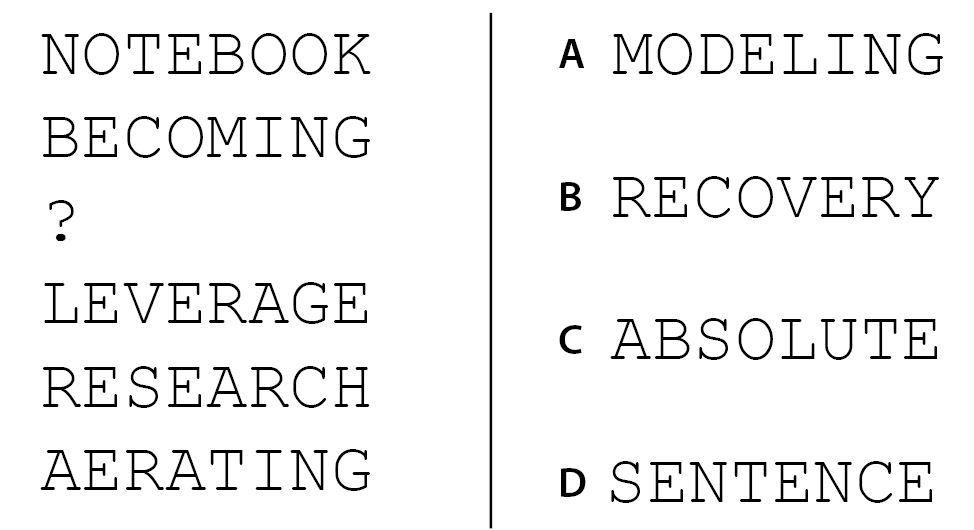
Material Properties
Solution Approach
Understanding material properties involves knowing mechanical properties (strength, elasticity, hardness), thermal properties (conductivity, expansion), and aesthetic properties (texture, color, finish).
Key Concept
Material selection in design requires understanding both functional and aesthetic properties of different materials.
Common Mistake
Confusing different material properties or not considering manufacturing constraints
Question 23 {#question-23}
Ergonomics Principles

Solution Approach
Ergonomics focuses on designing products that fit human capabilities and limitations. Key considerations include anthropometric data, biomechanics, and cognitive factors.
Key Concept
Good ergonomic design reduces strain, increases comfort, and improves user performance and safety.
Common Mistake
Ignoring anthropometric variations or focusing only on average users
Question 24 {#question-24}
Sustainable Design

Solution Approach
Sustainable design considers the entire product lifecycle, from material extraction to disposal. Key principles include reducing waste, using renewable materials, and designing for durability and recyclability.
Key Concept
Sustainable design minimizes environmental impact while maintaining functionality and user satisfaction.
Common Mistake
Focusing only on material choice without considering manufacturing processes or end-of-life disposal
Question 25 {#question-25}
Visual Hierarchy
Solution Approach
Visual hierarchy guides the viewer's eye through a design using size, color, contrast, positioning, and typography. It establishes the order of importance for different elements.
Key Concept
Effective visual hierarchy helps users navigate and understand information quickly and intuitively.
Common Mistake
Creating competing focal points or not establishing clear information priority
Question 26 {#question-26}
User Experience Design
Solution Approach
UX design focuses on creating meaningful and relevant experiences for users. It involves user research, information architecture, interaction design, and usability testing.
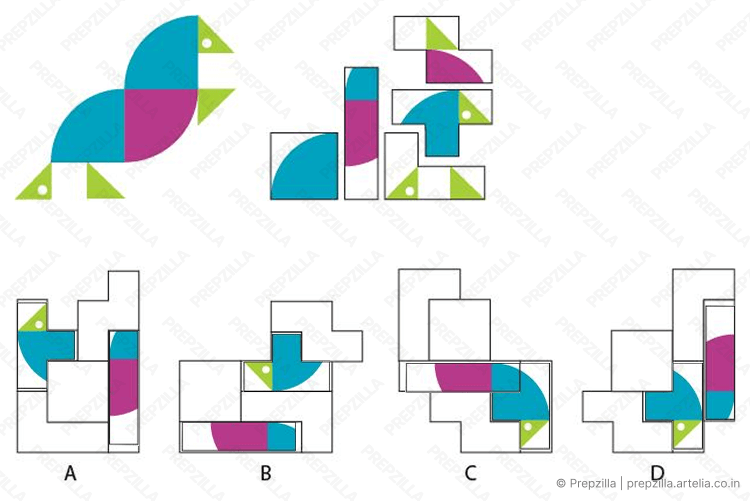
Key Concept
Good UX design is user-centered, accessible, and creates positive interactions between users and products.
Common Mistake
Confusing UX with UI design or not conducting proper user research
Question 27 {#question-27}
Design History
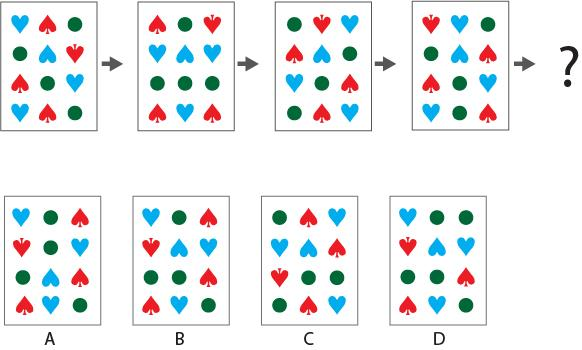
Solution Approach
Design history encompasses various movements like Art Nouveau, Bauhaus, Modernism, and Postmodernism. Each movement had distinct characteristics, philosophies, and influential figures.
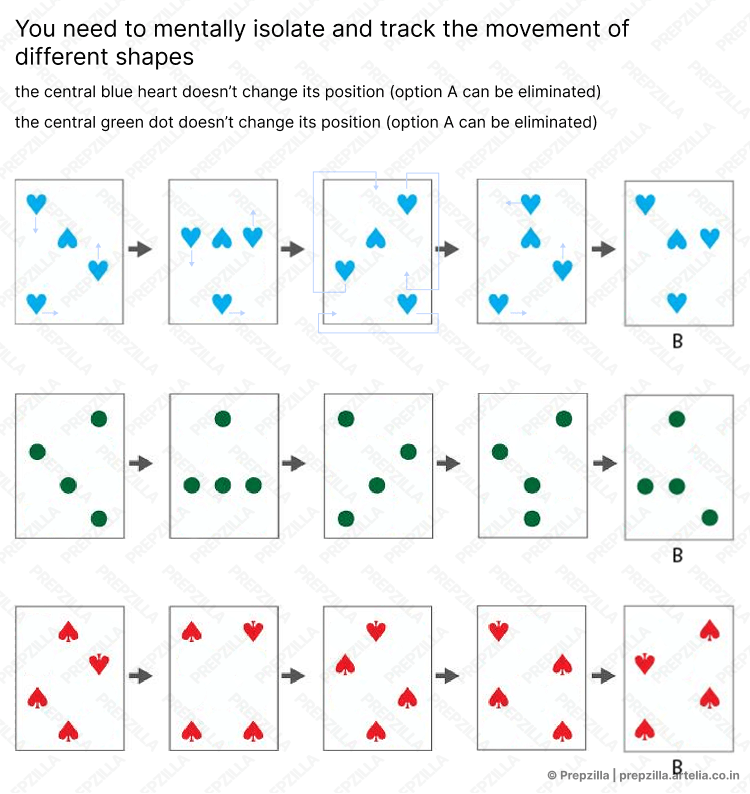
Key Concept
Understanding design history provides context for contemporary design practices and helps identify stylistic influences.
Common Mistake
Confusing different design movements or their chronological order
Question 28 {#question-28}
Hexagon Pattern Puzzle
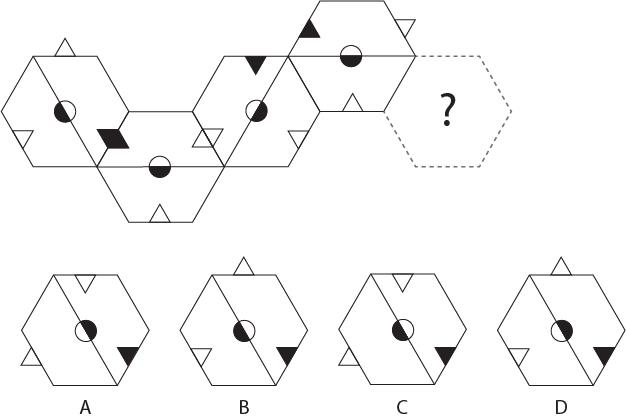
Solution Approach
This is a spatial pattern puzzle where you need to identify which hexagon fits based on the arrangement and types of shapes (triangles and circles, filled or unfilled) in the connected hexagons.
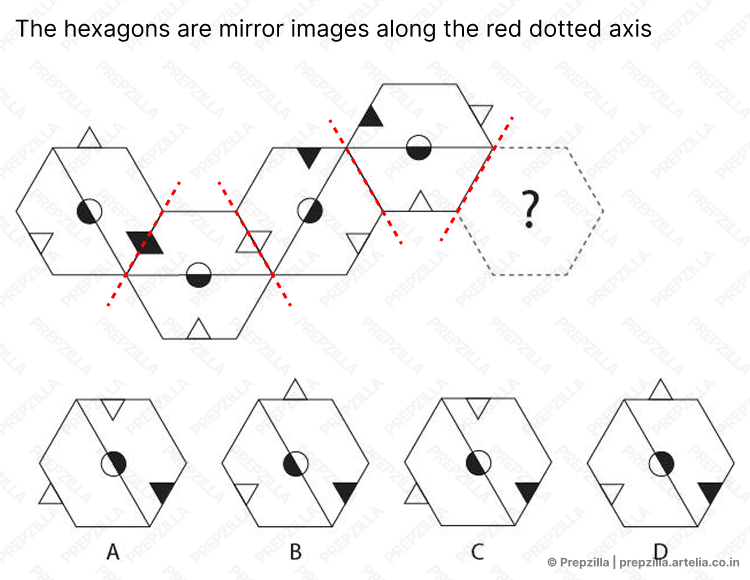
Key Concept
Identify which hexagon fits based on arrangement and types of shapes (triangles and circles, filled or unfilled) in connected hexagons.
Common Mistake
Ignoring whether shapes are filled or unfilled, not considering triangle orientation (up vs down), looking at hexagons in isolation instead of the complete structure, rushing without systematically checking each element
Question 29 {#question-29}
Shadow Projection

Solution Approach
Understanding how parallel light rays create shadows of 3D objects. When sunlight hits at 45° angle: a horizontal circular disc creates an elliptical shadow (stretched oval), while a sphere always creates a circular shadow regardless of light angle.
Key Concept
Understanding how parallel light rays create shadows of 3D objects and how shadow shape depends on object orientation relative to light source.
Common Mistake
Thinking both shadows would be circles, forgetting that angle of light affects the disc's shadow shape, confusing which shadow belongs to which object, not considering that a horizontal disc at an angle creates an elliptical projection
Question 30 {#question-30}
2D Profile View
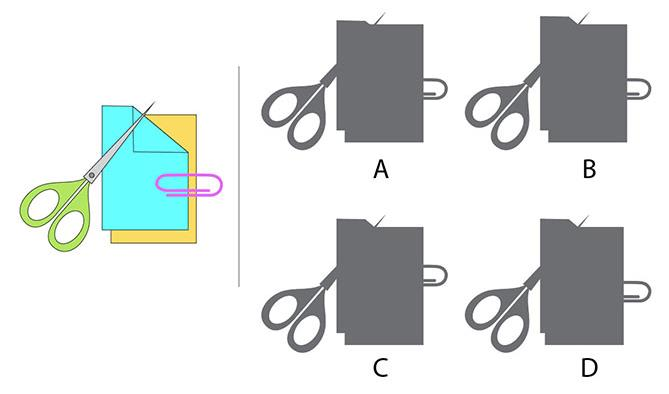
Solution Approach
Identifying the correct 2D profile (side view/silhouette) of a 3D arrangement. Profile = side view silhouette (usually from right side), showing outline when viewed from 90° to original view. All visible elements merge into one flat shadow/outline.
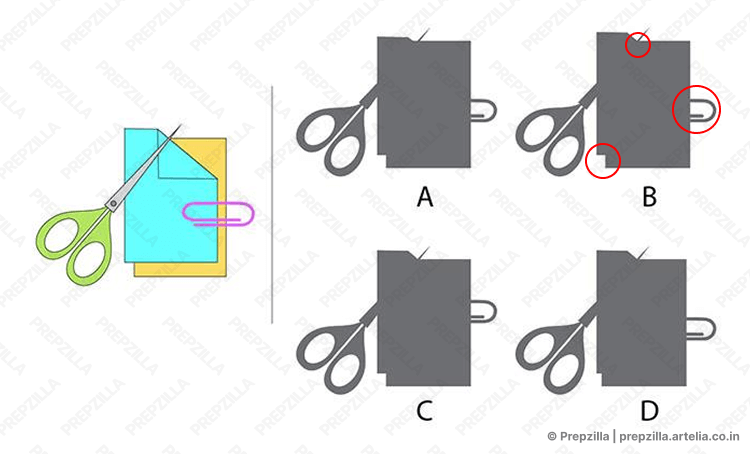
Key Concept
Identifying the correct 2D profile (side view/silhouette) of a 3D arrangement by understanding orthographic projection.
Common Mistake
Confusing profile view with top view or mirror image, not considering the overlapping/depth of objects, ignoring the angle/orientation of scissors, focusing only on scissors and forgetting the paper rectangles, not understanding that profile is a flat silhouette from the side
Question 31 {#question-31}
Mirror Image Text

Solution Approach
Understanding horizontal mirror reflection where text appears reversed as if seen in a mirror placed vertically. Letters flip horizontally (left ↔ right), letter order reverses in each word, but spacing and vertical alignment stay unchanged.
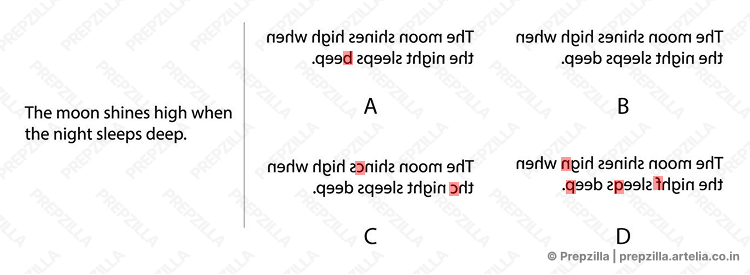
Key Concept
Understanding horizontal mirror reflection where text appears reversed as if seen in a mirror placed vertically on the right or left side.
Common Mistake
Reversing entire sentence order instead of just letters, confusing mirror image with upside-down text, not reversing ALL letters including punctuation, missing small details like dots or spacing, reading too quickly without letter-by-letter verification
Question 32 {#question-32}
Indian Classical Dance
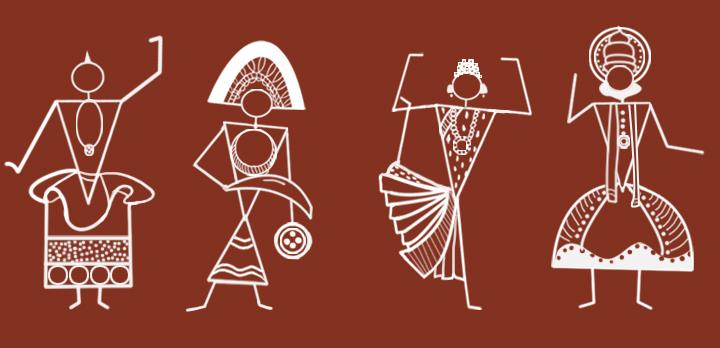
Solution Approach
Identifying Indian classical dance forms based on their distinctive visual characteristics like costumes, postures, ornaments, and regional styles. Key forms: Bharatanatyam (Tamil Nadu, angular poses), Kathak (North India, spinning), Kathakali (Kerala, elaborate makeup), Odissi (Odisha, tribhanga pose), Mohiniyattam (Kerala, graceful feminine), Manipuri (drum-shaped skirt), Kuchipudi (Andhra Pradesh, brass plate dance).
Key Concept
Identifying Indian classical dance forms based on distinctive visual characteristics like costumes, postures, ornaments, and regional styles.
Common Mistake
Confusing regional styles from same state (Kerala has both Kathakali and Mohiniyattam), not recognizing costume and makeup as key differentiators, mixing up North Indian vs South Indian classical forms
Question 33 {#question-33}
Transparent Sheet Folding
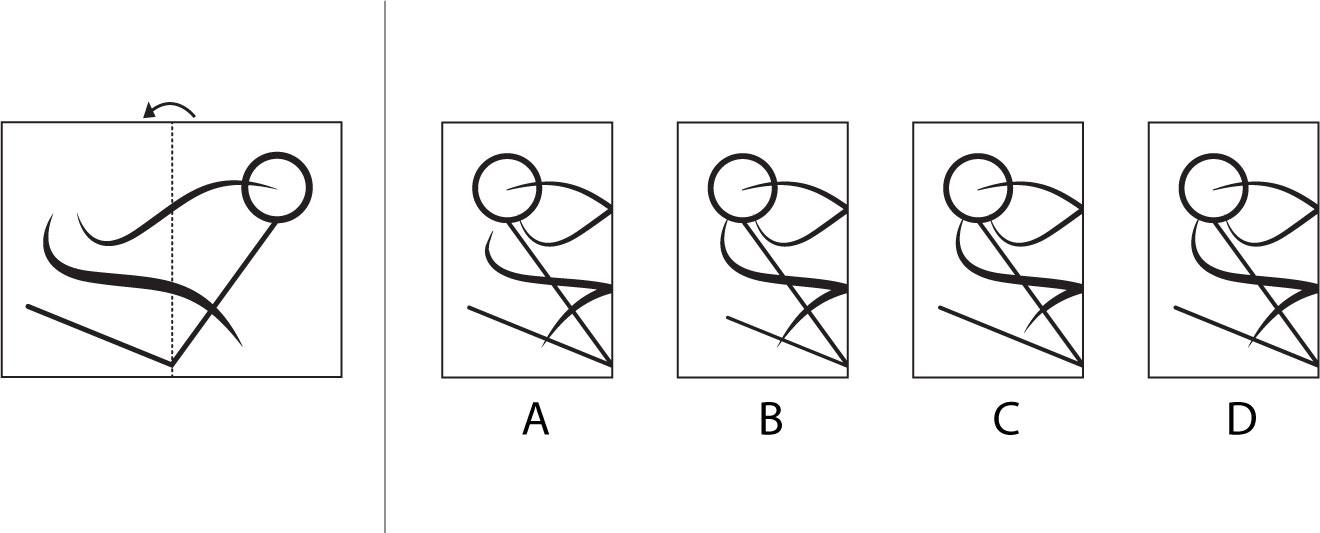
Solution Approach
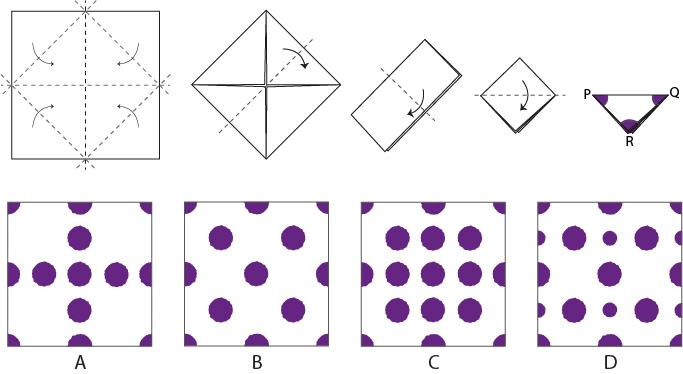
Understanding spatial transformation when a transparent sheet with a printed image is folded along a specific line. Since the sheet is transparent, you see BOTH the original image underneath AND the folded portion on top (mirrored), creating an overlapping/superimposed effect.
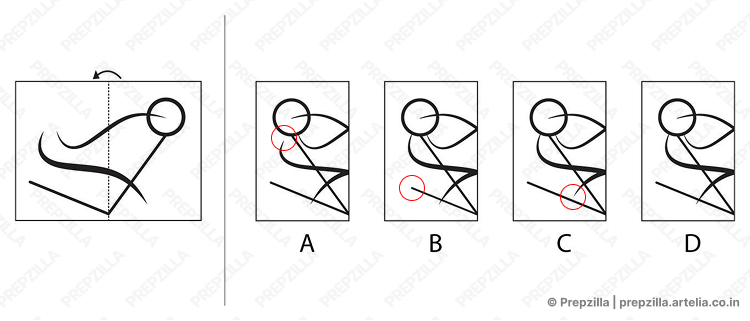
Key Concept
Understanding spatial transformation when transparent sheet is folded, creating mirror reflection on visible side with overlapping effect.
Common Mistake
Forgetting the sheet is TRANSPARENT (both sides visible), thinking only the folded part is visible, not applying mirror transformation to the folded portion, confusing fold direction (horizontal vs vertical), ignoring the overlap/superimposition effect
Question 34 {#question-34}
Animation Sequence
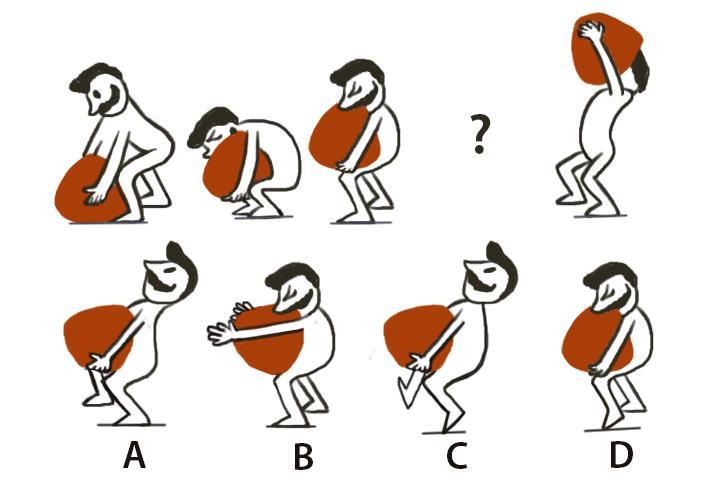
Solution Approach
Understanding motion continuity in animation by identifying the missing frame that creates smooth, logical movement progression. The sequence shows: picking up sack → holding low → lifting → [MISSING: sack at shoulder level] → overhead position. Missing frame bridges 'lifting from waist' to 'overhead'.
Key Concept
Understanding motion continuity in animation by identifying missing frame that creates smooth, logical movement progression.
Common Mistake
Choosing a frame that duplicates existing motion, ignoring the physics of lifting (gradual elevation), not considering body posture changes during lifting, selecting a frame that breaks motion continuity, forgetting that animation needs smooth, incremental transitions
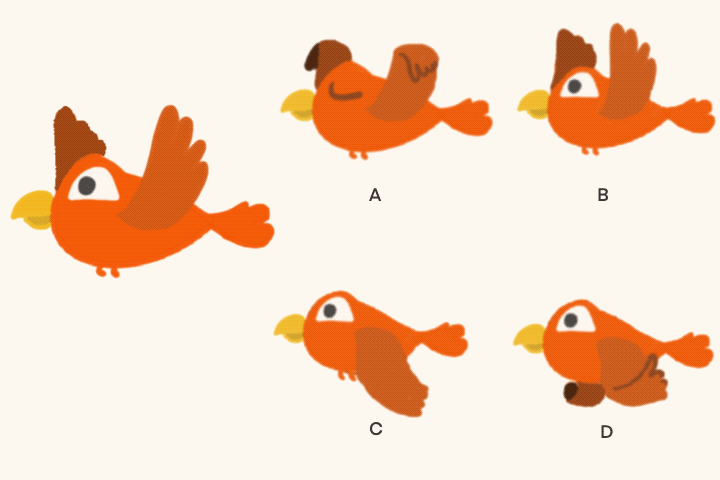
Question 35 {#question-35}
Design Element Analysis
Solution Approach
This question requires analyzing design elements and their relationships within a composition.
Key Concept
Understanding design elements and their visual relationships in composition.
Common Mistake
Not considering the overall composition and focusing on individual elements
Question 36 {#question-36}
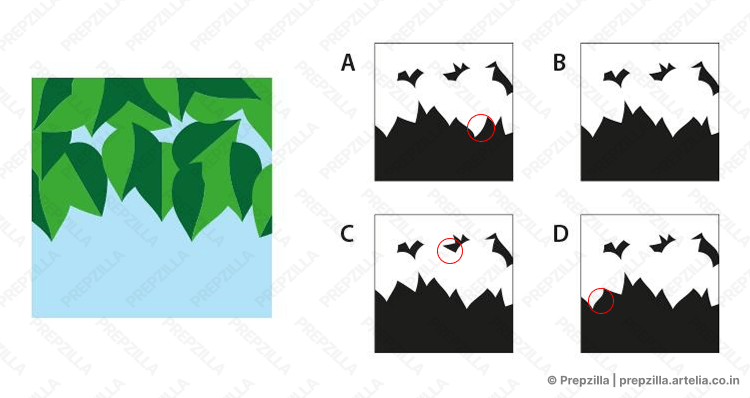
Color Inversion

Solution Approach
Understanding color inversion where specific colors are swapped: blue sky becomes black, green leaves become white, white birds become black. This creates a selective negative effect with inverted colors.
Key Concept
Understanding color inversion where specific colors are swapped: blue becomes black, green leaves become white.
Common Mistake
Not paying attention to shape proportions and details, confusing partial inversion with complete negative, missing the transformation of all three color elements
Question 37 {#question-37}
180-Degree Rule in Film

Solution Approach
The 180-degree rule maintains spatial continuity in film by keeping the camera on one side of an imaginary line between characters. This ensures consistent screen direction and eye-lines. Camera must stay on ONE side of the line connecting two people in conversation.
Key Concept
The 180-degree rule maintains spatial continuity by keeping camera on one side of imaginary line between characters, ensuring consistent screen direction.
Common Mistake
Not considering the flow of conversation/action, forgetting that the rule maintains spatial relationships between characters, choosing cutaway shots that don't show character interaction, not matching eye-line direction between shots
Question 38 {#question-38}
3D Wire Top View

Solution Approach
Visualizing the top view of a 3D bent wire by understanding how depth disappears when viewed from above. Top view = looking straight down. All vertical elements collapse into points/lines. Only horizontal (X-Y plane) movements are visible.
Key Concept
Visualizing top view of 3D bent wire by understanding how depth disappears when viewed from above.
Common Mistake
Confusing top view with isometric view, not eliminating vertical (Z-axis) information, misreading the bend directions from given views
Question 39 {#question-39}
Symbol Equation Puzzle

Solution Approach
Finding symbol-to-number assignments where same symbols represent same values across all equations. Solve systematically: T² = S, S + T = X, T × C = X, X + C = 25. Solution: T = 4, S = 16, C = 5, X = 20.
Key Concept
Finding symbol-to-number assignments where same symbols represent same values across all equations.
Common Mistake
Not testing solutions against ALL given equations, making calculation errors, assuming symbols can have different values in different equations
Question 40 {#question-40}
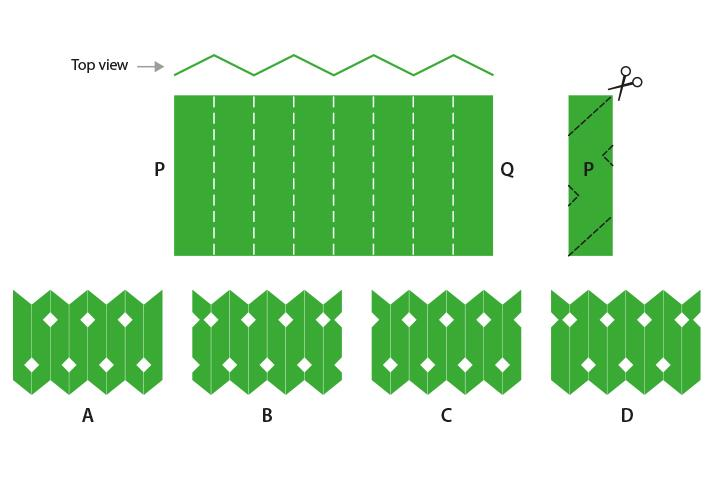
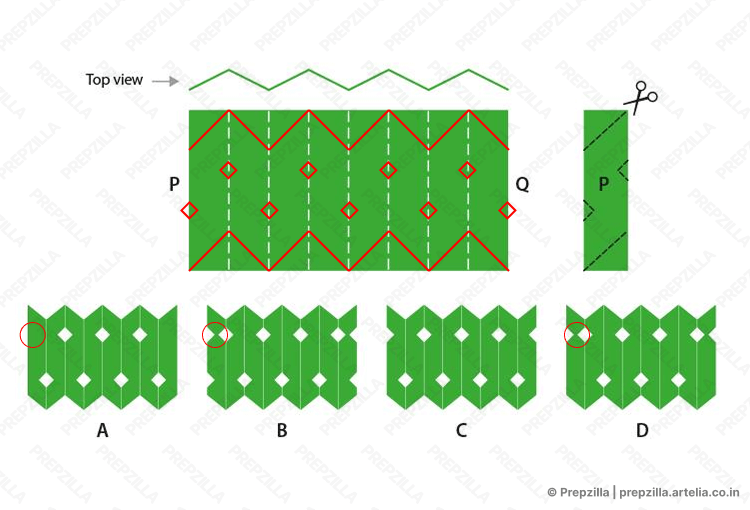
Paper Folding and Cutting
Solution Approach
Visualizing the result when paper is folded along lines and cut, then unfolded to reveal a symmetrical pattern. Paper folded accordion-style (7-8 vertical folds), cuts made on top and bottom edges create V-shaped notches. Each cut goes through ALL layers, creating diamond/rhombus shapes when unfolded.
Key Concept
Visualizing result when paper is folded, cut, then unfolded to reveal symmetrical pattern.
Common Mistake
Not counting all the folds accurately, forgetting cuts go through ALL layers simultaneously, miscounting the resulting pattern repetitions
Question 41 {#question-41}
Dropped Question
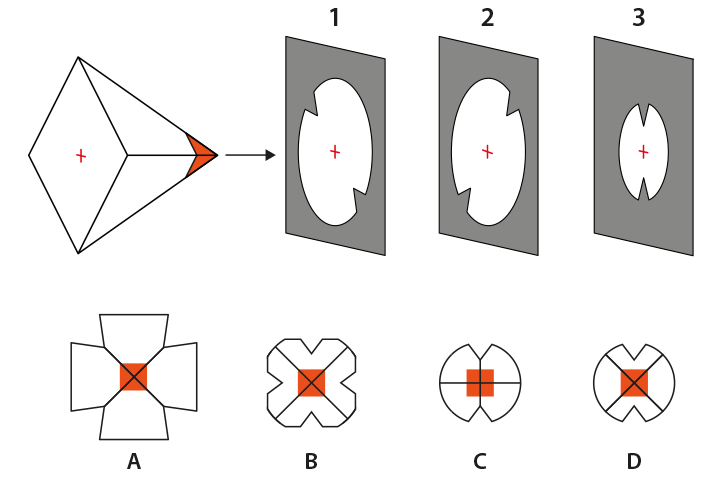
Solution Approach
Question dropped - all students awarded 3 marks
Key Concept
This question was dropped from evaluation
Common Mistake
N/A - Question was dropped
Question 42 {#question-42}
Trochoid Curve Path
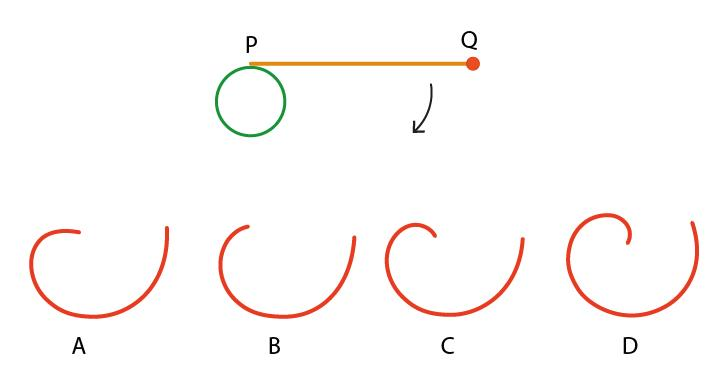
Solution Approach
Understanding the path traced by a point on a rod as it rolls around a circle, creating a trochoid curve. Rod length equals circle circumference. As rod rolls tangentially, point Q traces a U-shaped or cycloid-like curve that dips down and comes back up.
Key Concept
Understanding path traced by a point on a rod as it rolls around a circle, creating a trochoid curve.
Common Mistake
Thinking path is circular, not considering the rolling constraint, ignoring that rod length = circle circumference
Question 43 {#question-43}
Phonetic Mouth Positions
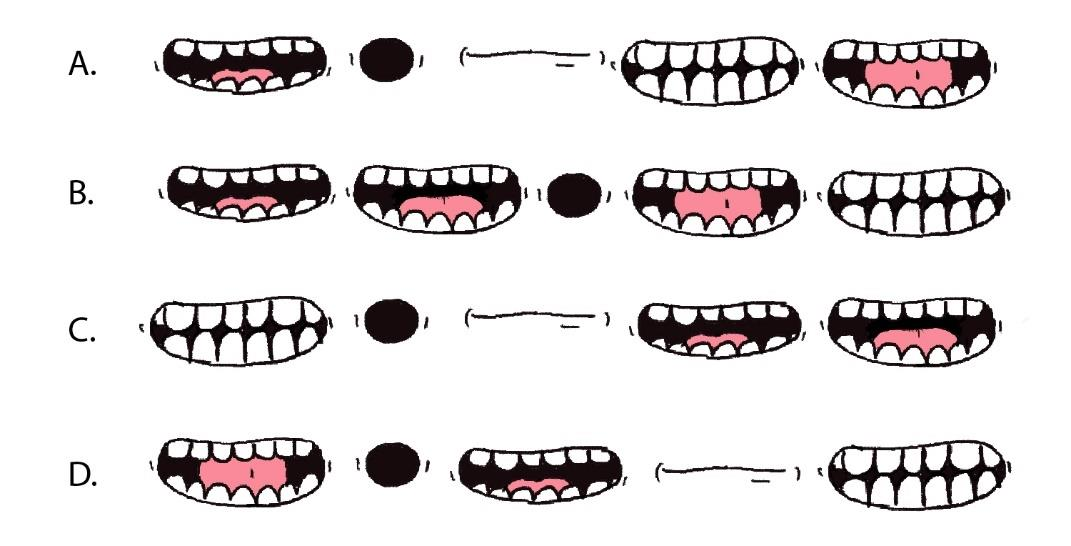
Solution Approach
Identifying correct phonetic mouth positions for pronouncing 'See you later' in sequence. Break down: 'See' (lips stretched wide, teeth visible), 'you' (lips rounded/puckered), 'la' (mouth open, tongue visible), 'ter' (teeth visible, lips slightly pulled back).
Key Concept
Identifying correct phonetic mouth positions for pronouncing 'See you later' in sequence.
Common Mistake
Not breaking phrase into individual sounds, ignoring tongue position for 'la', confusing similar mouth shapes
Question 44 {#question-44}
Disc Cutting Puzzle
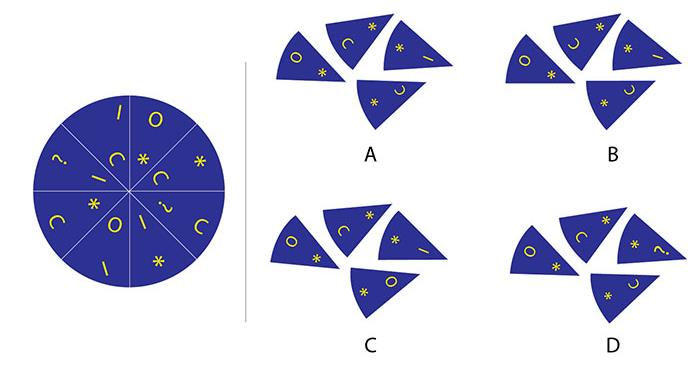
Solution Approach
Identifying which option contains all four distinct pieces when a decorated disc is cut along specific lines. The disc is divided into 8 triangular sections with four cuts: horizontal, vertical, and two diagonals. Track decorations (circles, symbols) on each piece.
Key Concept
Identifying which option contains all four distinct pieces when decorated disc is cut along specific lines.
Common Mistake
Not identifying all cutting lines correctly, missing decorative symbols on pieces, confusing piece orientations, not checking if ALL four parts are present
📊 Quick Stats & Performance Analysis
| Section | Total Questions | Average Difficulty | Key Topics |
|---|---|---|---|
| NAT (1-15) | 15 | Medium-Hard | Spatial Reasoning, Analytics |
| MSQ (16-27) | 12 | Medium | Design Knowledge, Mechanisms |
| MCQ (28-44) | 17 | Easy-Medium | Creativity, Observation |
🎯 Topic-wise Breakdown
| Topic | Questions | Difficulty | Success Tips |
|---|---|---|---|
| Visualization & Spatial Reasoning | 12 | Hard | Practice orthographic projections |
| Creativity | 8 | Medium | Focus on pattern recognition |
| Analytical & Logical Reasoning | 7 | Hard | Master basic geometry |
| Art & Design Knowledge | 6 | Medium | Study classical forms |
| Observation & Design Sensitivity | 5 | Medium | Train visual attention |
| Design Methods & Practices | 4 | Medium | Learn DFM/DFA principles |
| Practical & Scientific Knowledge | 2 | Medium | Understand mechanisms |
📖 Study Materials
| Resource | Description |
|---|---|
| 📝 Individual Question Solutions | Detailed solutions for each question |
| 📊 Topic-wise Question Bank | Practice by specific topics |
Time Management Blueprint
Recommended 60-Minute Breakdown
| Time Range | Section | Questions | Strategy |
|---|---|---|---|
| 0:00 - 16:00 | NAT (Q1-Q8) | All 8 questions | No negative marking—attempt all |
| 16:00 - 27:00 | MSQ (Q9-Q18) | 6-8 questions | Selective—only if 70%+ confident |
| 27:00 - 55:00 | MCQ (Q19-Q44) | All 26 questions | Eliminate 2 options before attempting |
| 55:00 - 60:00 | Review | — | Final checks and marking |
🎯 Key Preparation Strategies
NAT Questions Strategy
No negative marking means you should attempt all questions
- Attempt ALL questions (no negative marking)
- Target 70-80% accuracy for good score
- Don't spend more than 2 minutes per question
- Even educated guesses add value
MSQ Questions Strategy
Partial marking available but wrong options carry penalty
- Be highly selective—only if 70%+ confident
- Partial marking available, -1 for wrong options
- Eliminate obviously wrong options first
- Better to select fewer correct options than risk wrong ones
MCQ Questions Strategy
Small negative marking requires careful approach
- If you can eliminate 2 options, attempt the question
- Don't spend more than 1.5 minutes per question
- Small negative marking (-0.5) makes calculated risks worthwhile
- Use systematic elimination technique
📚 Related Resources
🎯 More CEED 2025 Content
| Resource | Description |
|---|---|
| 📝 Individual Question Solutions | Detailed solutions for each question |
| 📊 Topic-wise Question Bank | Practice by specific topics |
📅 Other Years
| Year | Resource |
|---|---|
| 2024 | 📄 CEED 2024 Questions |
| 2023 | 📄 CEED 2023 Questions |
| All Years | 📚 All CEED Papers (2013-2025) |
📖 Preparation Guides
| Guide | Description |
|---|---|
| 🎯 CEED 2026 Complete Guide | Comprehensive preparation guide |
| 📊 Topic-wise Practice | Strategic approach by topics |
India's most comprehensive FREE platform for CEED and UCEED preparation
Question Bank
1000+ previous year questions (2013-2025)
Solutions
Detailed explanations with step-by-step approach
Mock Tests
Full-length timed tests with realistic interface
Analytics
Performance tracking and weak area identification
Practice Modes
Topic-wise, year-wise, and custom practice
Cost
Completely FREE for all students
Last Updated: November 18, 2025 Solutions verified using official CEED 2025 answer key
Last updated: 20 January 2025